Martial arts give children a structured place to be active, learn a real skill and practise habits that matter outside the gym — listening, patience, respect and resilience. This guide looks at what children can develop through martial arts, how training changes as they grow, and how to choose a class.
Character and behaviour
Discipline and self-control
Martial arts classes run on clear rules. Children learn to listen to the coach, follow instructions, wait their turn and control their impulses with a partner in front of them.
Respect
Training with a partner means looking after them: listening when others speak, training safely and helping newer students.
Learning from mistakes
Techniques rarely work the first time. Children learn that getting something wrong is part of learning, and that practice changes the result.
Confidence
Confidence in martial arts comes from small, visible wins — a technique that finally clicks, a drill completed, a position they can now hold. Those wins are earned, which is why they mean something to a child.
Physical development
- Balance and coordination
- Spatial awareness and control of movement
- Strength and flexibility through bodyweight drills
- Cardiovascular fitness through active games and drills
Focus and emotional regulation
Classes ask children to pay attention, remember sequences and stay calm when something is hard. A physical outlet for energy can also help children settle, though every child responds differently.
Social skills
- Working with a partner
- Asking questions and asking for help
- Encouraging others
- Handling frustration without lashing out
How training changes with age
Age groups vary from club to club, but training generally develops along these lines:
Younger children
Basic movement, following directions and short, game-based activities, with plenty of emphasis on listening and rules.
Primary-school years
More structure and more technique, with basic self-defence concepts and more partner work.
Teenagers
More complex technique and conditioning, and a path into adult classes — with competition as an option, not a requirement.
Choosing the right class
- Coaches who explain things simply and keep children engaged
- Clear safety rules and controlled partner work
- A class matched to your child’s age and experience
- The chance to try a class before committing
- Straight answers to your questions
Kids martial arts at Marrickville Martial Arts Club
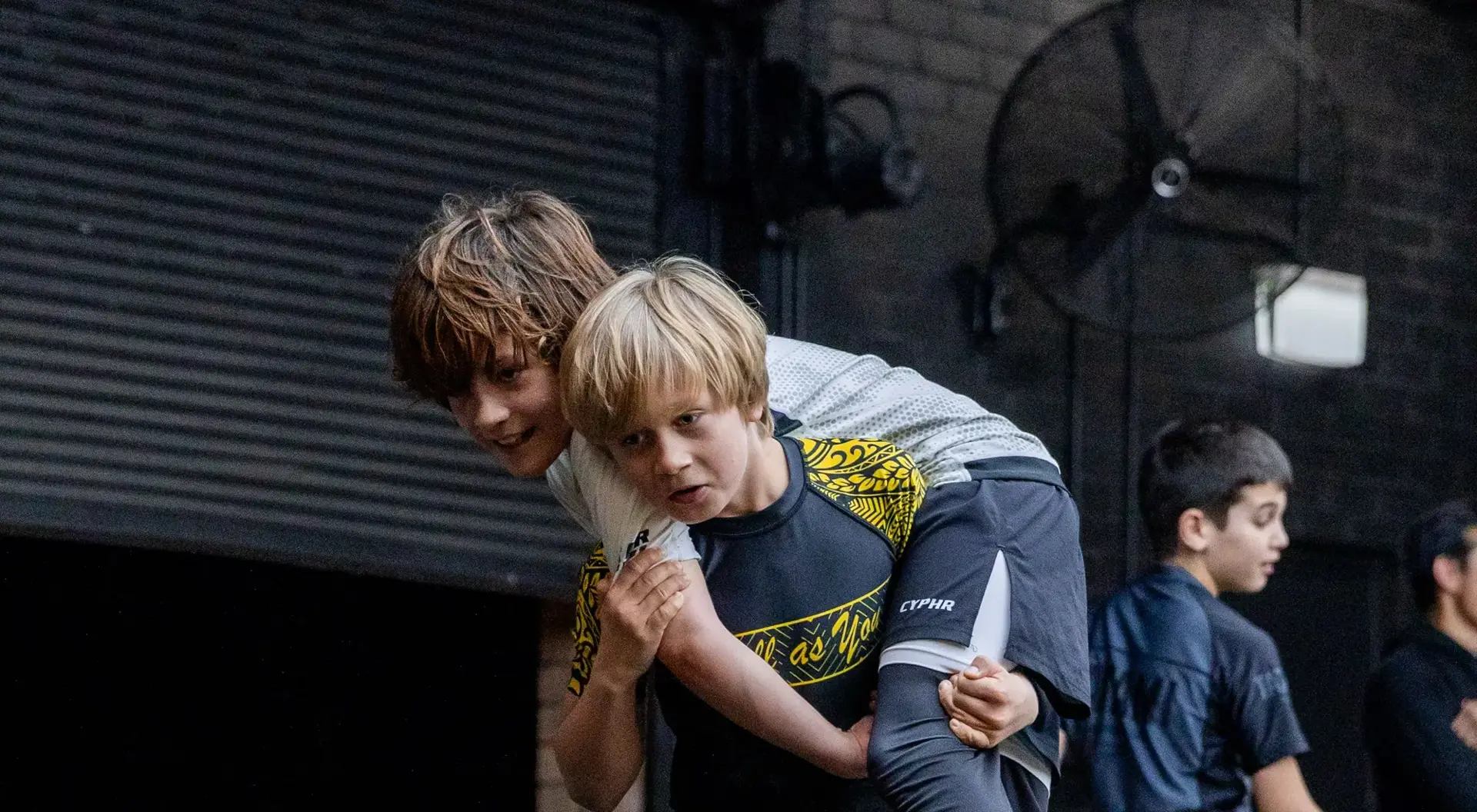
MMAC runs kids classes for ages 5–12 in Brazilian Jiu-Jitsu, Muay Thai and wrestling, and the wrestling timetable also includes a session shared by adults and kids. Sessions are shorter than adult classes, and technique is taught through drills and games so children stay engaged.
A first kids class usually includes meeting the coach and the group, a warm-up game, one or two techniques taught simply, and partner drills with a structured finish. Children need comfortable sportswear without zips, buttons or pockets, a water bottle, long hair tied back and no jewellery.
The right class depends on your child’s age, so contact the club and we’ll recommend one. The free trial works for kids too: one class. See kids programs for more detail.